
Pest and Rat Prevention Standards for NYC Restaurants
In New York City food service environments, pest prevention is rarely solved by a single action. It is the result of disciplined daily routines, clear accountability, and alignment with NYC Health guidance. Rats and other pests are drawn to food residue, moisture, and shelter. When those conditions are consistently removed, pest pressure drops significantly.
We see that restaurants with the strongest prevention records treat pest control as an operational standard, not a reaction to a violation or complaint. The goal is simple. Remove what pests need to survive, every day, without exception.
This article outlines practical, inspection-ready standards based on NYC Health guidance and the Integrated Pest Management model, written for restaurant owners and operators who want to stay compliant, protect their reputation, and avoid costly disruptions.
Why Pest Prevention Is an Operational Issue in NYC Restaurants
NYC Health is clear about one core reality. Rats need very little to survive. According to city guidance, rodents can live on as little as one ounce of food per day. That means even small spills, grease residue, or leaking trash bags can sustain activity over time.
Need a Reliable Cleaning Partner in NYC? We deliver consistent, professional commercial cleaning supported by trained in-house staff and clear communication. If you’re looking for a service that respects your space, your schedule, and your operational flow, we’re here to help.
Outdoor dining increases exposure even more. Sidewalks, curbs, and platform structures create additional hiding places and food access points if they are not managed with the same discipline as interior spaces.
Effective prevention depends on consistency. Sporadic effort creates gaps. Predictable routines close them.
Understanding Integrated Pest Management for Food Service
Integrated Pest Management, or IPM, is the prevention framework recommended by NYC Health for food service establishments. IPM focuses on eliminating the conditions that attract pests rather than relying on routine pesticide use.
Under the IPM model, restaurants focus on four ongoing priorities:
- Removing food sources such as crumbs, spills, grease film, and exposed waste
- Removing water sources including leaks, standing water, and damp zones
- Removing shelter like clutter, stacked cardboard, and hidden buildup
- Blocking access points by sealing gaps, maintaining door sweeps, and repairing penetrations
IPM is not a one-time fix. It is a continuous system supported by sanitation, monitoring, documentation, and coordination with licensed pest management professionals when required.
Daily Pest Prevention Standards for Restaurants
Strong prevention starts with daily closeout and opening routines. NYC Health guidance emphasizes that written checklists and clear staff responsibilities are essential.
Food Residue and Surface Control
We recommend treating food residue as a time-sensitive risk. Spills should be spot cleaned immediately, not deferred until closing. Prep areas, service stations, and splash zones should be wiped, scrubbed, and sanitized according to site procedures.
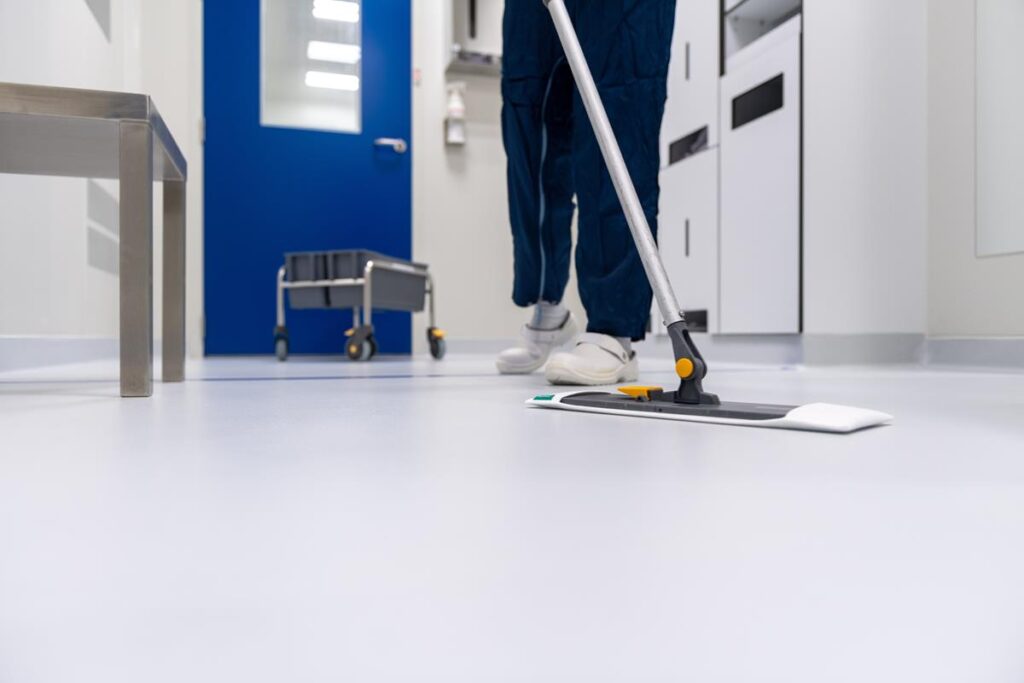
Floors should be swept and mopped thoroughly, with special attention to edges, corners, and floor wall junctions where crumbs collect. Floors should be left clean and dry. Moisture left overnight increases pest activity.
Behind and Under Equipment
Rats and insects feed and hide where visibility is low. NYC Health guidance specifically highlights the importance of cleaning behind and under equipment.
Daily routines should include:
- Removing debris from under equipment and kick plates
- Wiping accessible grease buildup and residue
- Keeping these zones free of stored items and clutter
- Flagging damaged panels, gaskets, or leaks for repair
These steps reduce odor trails that pests use to navigate and return.
Trash Handling and Staging
Garbage management is one of the highest impact prevention measures. NYC Health requires food service businesses to maintain enough containers to hold up to three days of garbage and to use hard plastic or metal containers with tight-fitting lids.
Daily standards should include:
- Using heavy-duty bags and tying them securely to prevent leakage
- Emptying trash on a predictable schedule, not only when bins appear full
- Cleaning trash cans, lids, and surrounding floors
- Washing garbage staging areas, sidewalks, and curbs daily
Garbage and recycling should not remain on the curb for more than two hours. Timing matters.
Outdoor Dining and Sidewalk Areas
Outdoor dining introduces constant exposure. NYC Health notes that even small amounts of food residue can sustain rats, making speed and frequency critical.
Outdoor prevention routines should include:
- Daily washdowns of dining platforms, sidewalks, and curbs using soap and water or a 10 percent bleach solution for non food contact surfaces
- Cleaning underneath raised structures where nesting can occur
- Removing standing water whenever it appears
- Coordinating trash set-out times tightly around pickup windows
What guests see matters, but what is underneath matters more.
Weekly and Monthly Deep Prevention Tasks
Daily routines control surface risk. Weekly and monthly tasks address buildup that accumulates over time.
Weekly Focus Areas
- Pulling movable equipment and degreasing floors and walls
- Washing dumpsters, compactors, and trash cans
- Inspecting door sweeps and thresholds for gaps
- Scrubbing floor drains and wet areas
Rats can enter through openings as small as a quarter inch. These inspections are not optional.
Monthly Walk-Through and Review
Monthly reviews help prevent repeat issues.
- Review daily logs and recurring findings
- Adjust cleaning sequences based on problem zones
- Walk the site with management to confirm alignment between sanitation, waste handling, and maintenance
- Verify that storage practices allow clear inspection and access
Documentation is a prevention tool. Written records support accountability and inspection readiness.
Working Within NYC IPM Requirements
Only licensed pest management professionals can apply pesticides in commercial food service environments. NYC Health guidance discourages routine spraying and prohibits foggers and bombs under IPM programs.
This division of responsibility is intentional. Restaurant teams control sanitation, monitoring, and documentation. Licensed professionals handle treatment decisions when monitoring indicates a need.
IPM works best when each role is respected and coordinated.
Prevention Protects More Than Compliance
Strong pest prevention protects inspections, guests, staff, and brand reputation. It also reduces operational stress. When sanitation routines are consistent and documented, surprises become rare.
For restaurants and venues operating in NYC, pest prevention is not about reacting to a problem. It is about running a disciplined operation that removes risk before it appears.
We believe that consistency, attention to detail, and clear procedures are the foundation of inspection-ready food service environments.
Sources and NYC Health References
- Best Practices for Pest Proofing Food Service Establishments
NYC Department of Health - How to Reduce Pests When Offering Outdoor Dining
NYC Department of Health - Rat Prevention: Food Service Establishments
NYC Department of Health - Integrated Pest Management Model Scope of Services
NYC Department of Health
Let’s Plan Your Clean
Free Quote
We’ll call you, assess your space, and give you a clear estimate.
Learn how we get real results.