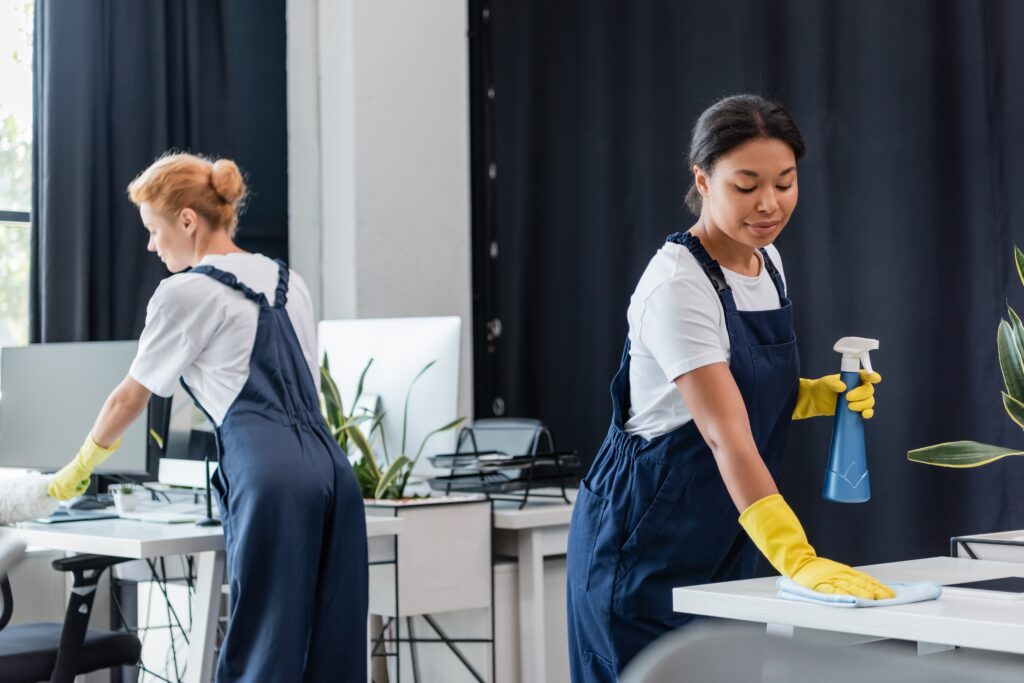

Step-by-Step Guide for Efficient Cleaning in Art Galleries
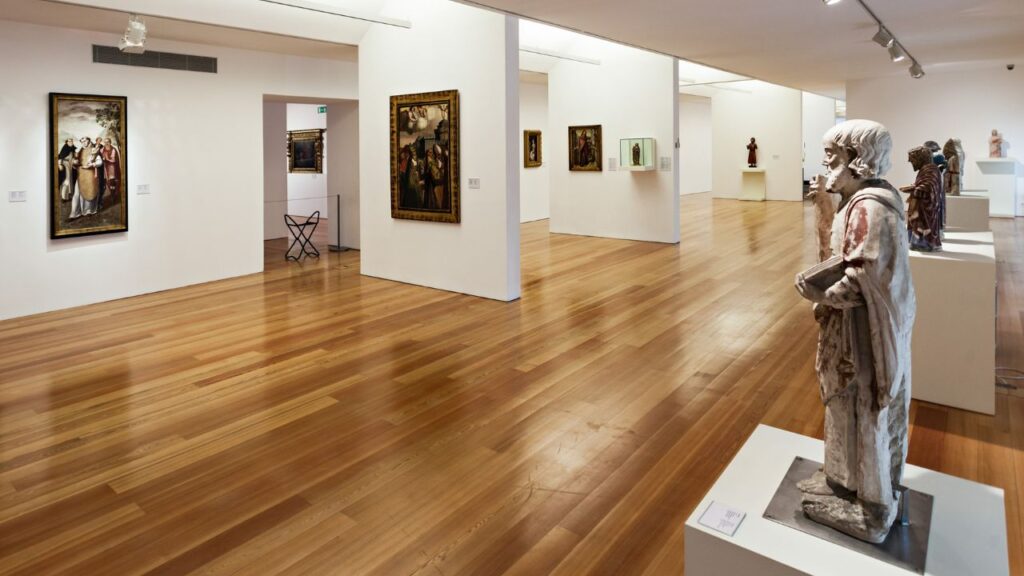
Art galleries are more than exhibition spaces. They are controlled environments where every surface, corner, and piece of décor contributes to the visitor’s experience and the preservation of valuable works. Keeping them clean isn’t as simple as dusting and mopping; it requires precision, discretion, and respect for the art on display.
In this guide, we walk through a structured cleaning process that protects delicate collections, maintains a welcoming atmosphere, and keeps operations running smoothly. Whether you manage a small gallery or a large institution, these steps will keep your space spotless. They also prevent damage to priceless pieces. From daily maintenance routines to emergency spill protocols, you’ll find practical advice that aligns cleanliness with conservation.
Understanding the Unique Cleaning Needs of Galleries
Unlike offices, gyms, or retail spaces, art galleries showcase pieces that may be fragile or irreplaceable. Some are also highly sensitive to environmental changes. This makes cleaning a balance between presentation and preservation. A routine that works for one commercial space might be too aggressive for an exhibit hall. Even a small misstep, like using the wrong cloth or cleaner, can have long-lasting effects on the artwork.
In most galleries, cleaning teams coordinate directly with curators and security staff before starting work. This ensures that cleaning schedules align with exhibit rotations, installation work, or special events. It also identifies high-risk areas needing extra caution. Examples include open sculptures, intricate frames, or delicate display materials.
Need a Reliable Cleaning Partner in NYC? We deliver consistent, professional commercial cleaning supported by trained in-house staff and clear communication. If you’re looking for a service that respects your space, your schedule, and your operational flow, we’re here to help.
Humidity control, dust management, and proper lighting care all play a role in the gallery’s overall condition. That means cleaning is not just about removing dirt, but about maintaining an environment where art can be safely displayed over time.
Step 1: Preparation Before Cleaning
A successful gallery cleaning starts long before the first sweep or wipe. Preparation is essential to ensure both safety and efficiency.
- Review the cleaning schedule and scope: Begin by checking the day’s plan. Identify which areas are open to the public. Note spaces in transition for upcoming exhibits. Flag high-sensitivity items needing special precautions. A clear schedule reduces the risk of missed spots or unnecessary disruption.
- Wear proper attire and protective gear: Uniforms should be clean, professional, and allow for ease of movement. Gloves, preferably powder-free, are a must to prevent skin oils from transferring to surfaces. Closed-toe, non-slip shoes protect staff and reduce the risk of accidents on polished or freshly mopped floors.
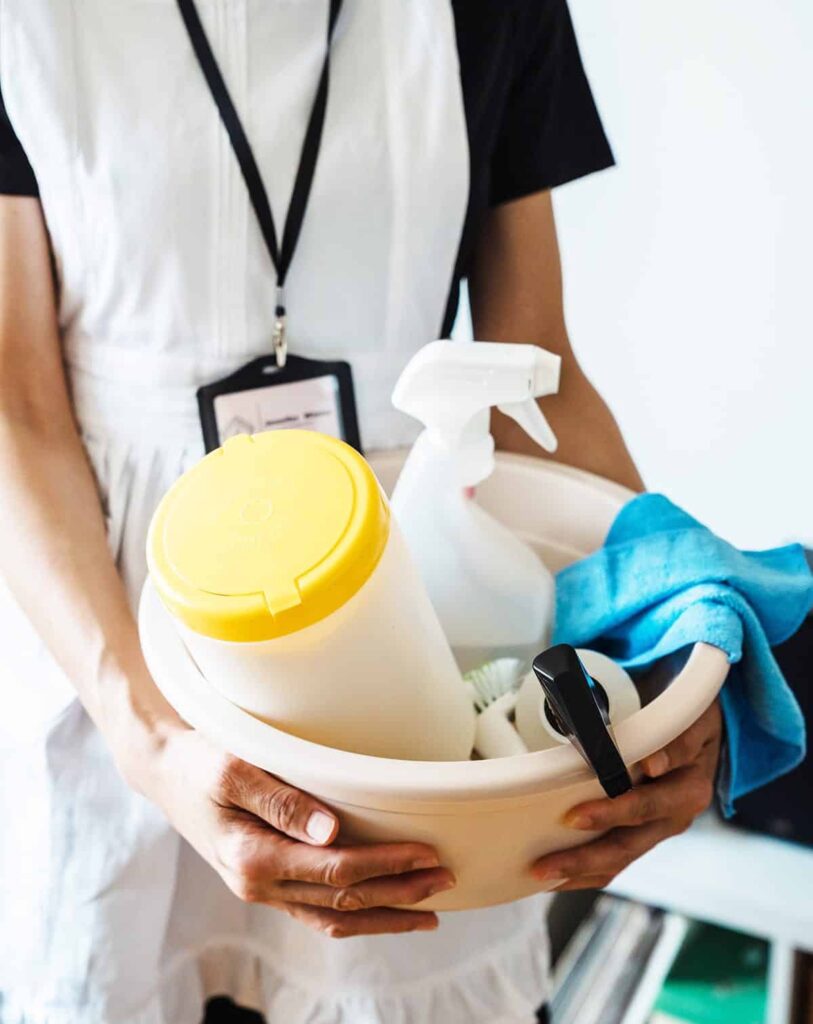
- Select the right tools and products: Art galleries demand non-abrasive tools and cleaning products free from harsh chemicals or strong scents. Microfiber cloths, lint-free wipes, and soft-bristle brooms are preferred. For cleaning solutions, always opt for pH-neutral products to avoid damaging materials. Ensure that all supplies are pre-approved by the gallery’s management or conservator.
- Secure the work area: Before starting, set up “Cleaning in Progress” signage where needed. Confirm that barriers or stanchions protect both visitors and artworks. If cleaning will occur outside open hours, make sure lighting is adequate and any restricted areas remain secured.
By preparing thoroughly, you set the stage for a smooth, incident-free cleaning process. This safeguards the gallery’s assets and ensures pristine presentation.

Step 2: Protecting the Artwork
The most important rule in gallery cleaning is that the artwork itself should never be touched, moved, or exposed to unnecessary risk. Before any cleaning begins, staff should identify which pieces are displayed without protective casing, which are on pedestals, and which might be vulnerable to dust or vibration.
Barriers, stanchions, or temporary covers should be placed where needed to create a safe distance between cleaning activity and the artwork. This is especially important when mopping, vacuuming, or moving equipment near sculptures, installations, or open-framed pieces.
Protection also extends to the materials and techniques used. Any sprays, polishes, or moisture-based products should be applied to a cloth first, never directly onto surfaces near art. This prevents airborne particles or droplets from landing on delicate finishes or pigments.

For high-value or fragile items, it’s wise to consult the curator or a conservation specialist before cleaning nearby areas. By putting these precautions in place, cleaning teams can maintain a spotless environment without jeopardizing the very pieces the gallery exists to showcase.
Step 3: Floor Maintenance
Floors in art galleries serve as both a functional surface and a framing element for the artworks on display. Because they endure constant foot traffic, they require regular attention to keep them clean, safe, and visually appealing.
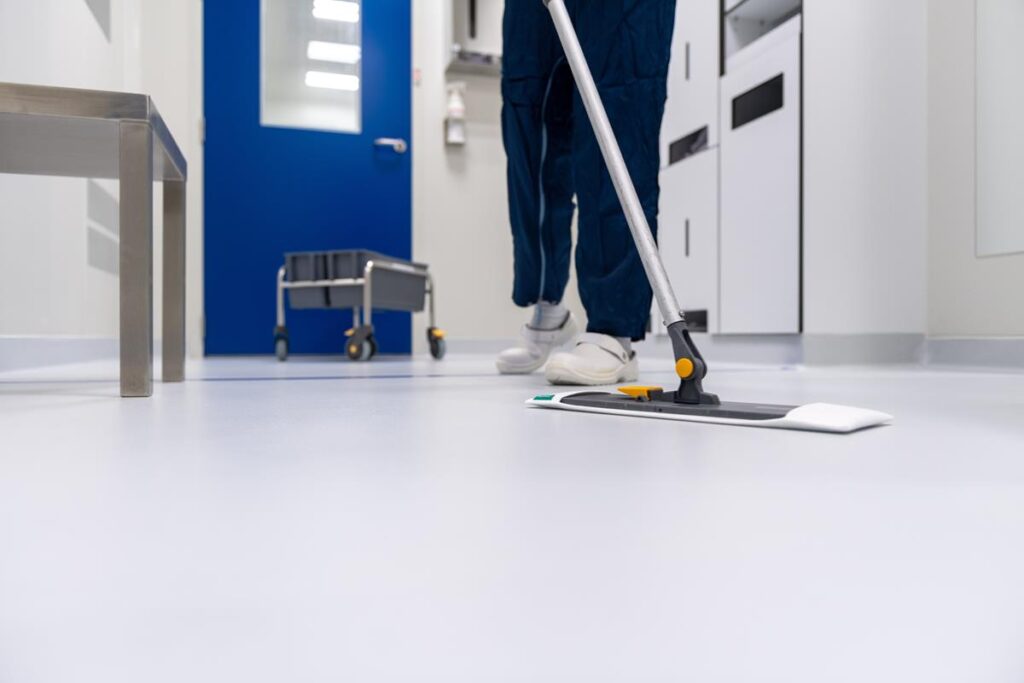
The process begins with dry cleaning methods, sweeping with a soft-bristle broom or vacuuming with a brush attachment to remove dust, dirt, and small debris without scattering particles into the air. Once the surface is free of loose material, mopping with a pH-neutral solution helps lift any remaining residue. Moisture control is critical: too much water can seep into floor seams, warp wood, or dull polished stone.
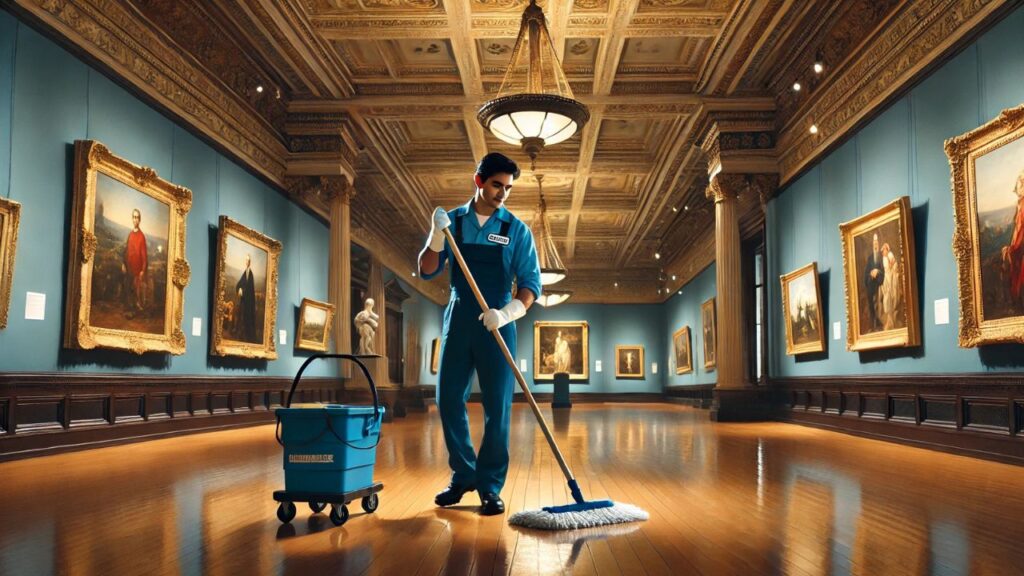
Certain floor types, such as hardwood, marble, or high-gloss concrete, benefit from periodic buffing or polishing to restore their sheen. This not only enhances the visitor experience but also extends the life of the flooring. Work methodically, cleaning from one end of the room to the other. Keep equipment away from pedestals and display stands.
In high-traffic areas, applying discreet protective mats can help minimize wear while maintaining the gallery’s aesthetic integrity. A well-maintained floor not only reflects light beautifully but also reinforces the impression of a meticulously cared-for space.
Step 4: Dusting and Surface Care
Dust is one of the most persistent challenges in gallery maintenance, as it settles on every horizontal surface and can accumulate quickly, dulling the presentation of both the art and its surroundings. Effective dust control starts with using the right tools: microfiber cloths, electrostatic dusters, and soft, lint-free rags that capture particles rather than pushing them around.
Dust gently and methodically. Begin with higher surfaces and work downward to avoid re-soiling freshly cleaned areas. Labels, frames, plinths, and protective barriers deserve particular attention, as they often fall within visitors’ line of sight.
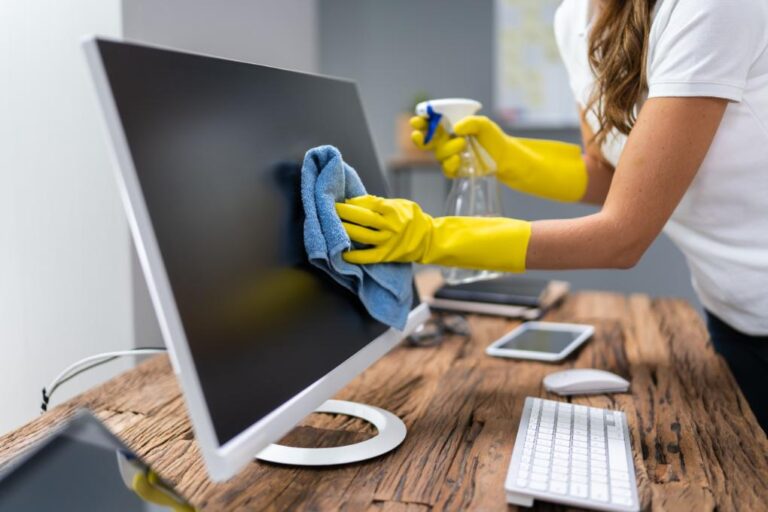
High-touch surfaces, such as railings, seating, door handles, and display case edges, require not only dust removal but also regular disinfection to maintain hygiene. Disinfectants should be applied indirectly, sprayed onto the cloth instead of the surface, to prevent over-saturation or accidental contact with artworks.

For wood or metal fixtures, a product designed for that specific material should be used to preserve the finish. By treating dusting as both an aesthetic and a protective task, galleries can maintain a crisp, clean look that complements the art without risking damage to surrounding fixtures.
Step 5: Glass and Display Case Cleaning
Clean, streak-free glass is essential in a gallery setting, as it serves as the invisible barrier between the public and the artwork. Whether it’s a protective case around a sculpture or the front panel of a framed piece, glass must be maintained to a flawless standard so that it does not distract from the exhibit.
Cleaning begins with removing dust using a dry, lint-free cloth to prevent scratching. Next, a streak-free glass cleaner or a mild vinegar solution can be applied, always to the cloth rather than directly onto the glass, to avoid overspray onto the artwork or frame. Working in small sections and using overlapping strokes helps ensure no streaks remain.

Display cases require equal attention to both the interior and exterior surfaces. Clean the inside only under supervision or when artwork has been safely removed. Maintain the outside more regularly.
Frames, hinges, and seals should also be inspected for dust buildup or fingerprints, which can be particularly visible under gallery lighting. A consistently clear and polished display not only enhances the viewing experience but also signals to visitors that the artwork is being cared for with the highest level of professionalism.
Step 6: Back-of-House & Staff Area Cleaning
While the exhibition space draws the most attention, a gallery’s back-of-house areas are just as important for overall operations. Offices, storage rooms, and preparation spaces must be kept organized and free from clutter to ensure efficiency and safety.
Regular cleaning includes vacuuming or mopping floors, dusting desks and shelving, and wiping down equipment used by staff. Keep storage for art supplies, tools, or installation materials orderly. This prevents accidents and makes locating items easier.
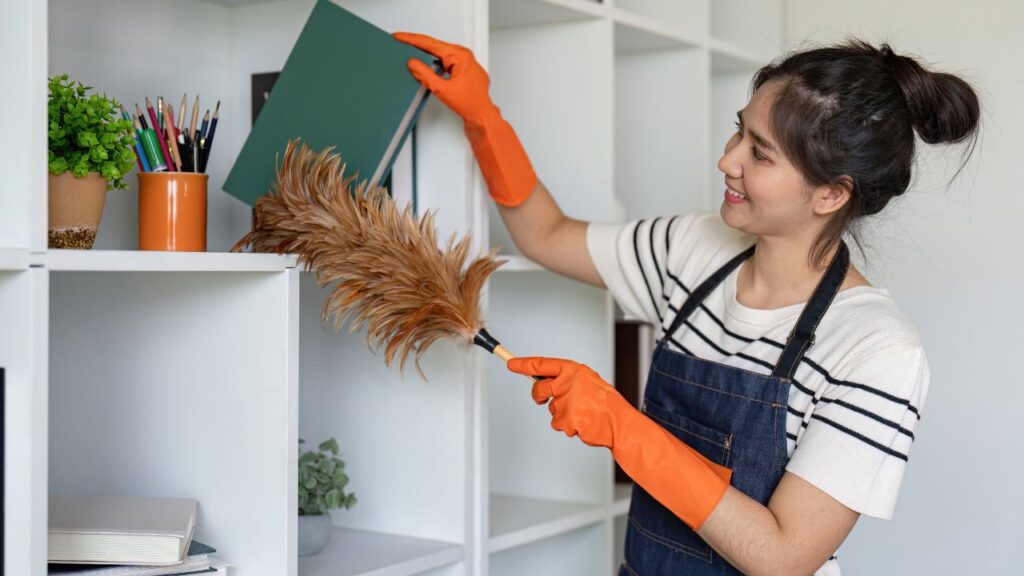
Staff restrooms, kitchens, or break areas demand daily attention. These areas should be sanitized thoroughly, sinks, counters, and appliances wiped clean, and floors mopped. Trash and recycling bins must be emptied daily, and supplies such as soap, paper towels, and tissues restocked without fail.
By keeping these behind-the-scenes areas clean and functional, staff can focus on their roles without the distractions or risks posed by disorganization and poor hygiene. A clean work environment also reinforces professionalism and ensures that cleanliness is consistent across every part of the gallery.
Step 7: Spot Cleaning During Open Hours
Even with a thorough pre-opening routine, minor cleaning needs will arise while the gallery is open to visitors. The key to effective spot cleaning is discretion, addressing issues promptly without drawing unnecessary attention or disrupting the viewing experience.
Staff should be trained to move quietly and carry only the essentials, such as a small microfiber cloth, a discreet spray bottle, or a pocket trash bag. Common situations include wiping fingerprints from glass, removing small debris from the floor, or quickly cleaning a spill in a café or lounge area.

Safety remains a priority during public hours. If a spill or hazard requires immediate attention, clear signage should be placed quickly to alert visitors, and the area should be addressed as efficiently as possible. If cleaning cannot be discreetly handled, note the issue. Address it fully after gallery hours. By maintaining vigilance and responding promptly, galleries can keep the environment pristine while ensuring that the visitor experience remains uninterrupted.
Step 8: Closing Routine and Daily Final Check
At the end of the day, a structured closing routine ensures the gallery is spotless and ready for the next opening. Begin with a full walkthrough of all exhibition spaces. Check for missed dusting, smudges on glass, or debris on floors. Floors should be swept, vacuumed, and mopped as needed, with special care taken around pedestals and display cases. All trash and recycling must be removed from both public and staff areas, leaving no lingering odors or clutter.
Once cleaning tasks are complete, a final inspection should be carried out by a supervisor or designated staff member. This includes checking that all cleaning equipment is stored securely, supplies are replenished for the next day, and that lighting, climate controls, and security systems are set according to gallery protocols. The final check serves as quality control and safeguard. It ensures the gallery remains professional and welcoming.

Step 9: Weekly and Monthly Deep Cleaning Tasks
While daily cleaning routines keep a gallery looking presentable, deeper cleaning is necessary to address areas that accumulate dust and wear over time. On a weekly basis, tasks may include vacuuming upholstered seating, spot-cleaning carpets, and polishing metal fixtures.
Wooden floors can be buffed to restore their natural luster, while stone or tile surfaces may need a specialized cleaner to remove buildup without damaging the finish. High-touch surfaces, even if cleaned daily, can benefit from a more thorough sanitizing to ensure optimal hygiene.

Monthly or quarterly maintenance addresses the less accessible parts of the gallery. Tasks include high dusting for light fixtures, ceiling vents, and moldings. Also clean under and behind display cases. Grout lines in tiled areas can be scrubbed to restore color and cleanliness, and windows or skylights should be washed inside and out to maintain clarity and natural light quality. By scheduling these deeper tasks regularly, galleries can prevent gradual deterioration and keep every element of the space looking as pristine as the day it was installed.
Conclusion
At Busy Bee Cleaning Service, we understand that maintaining an art gallery means more than keeping it clean—it’s about preserving an atmosphere of excellence. Since 2004, we’ve partnered with New York’s most respected institutions to deliver reliable, discreet, and detail-focused cleaning that protects the artwork and enhances the visitor experience.
By following a methodical, step-by-step approach, our trained in-house team ensures every space is exhibition-ready, every time. If your gallery needs a trusted cleaning partner, we’re ready to help protect your collection. We’ll keep your environment pristine. Schedule your gallery cleaning with Busy Bee today—so you can focus on the art, while we handle the rest.
Let’s Plan Your Clean
Free Quote
We’ll call you, assess your space, and give you a clear estimate.
Learn how we get real results.