
10 Key Factors to Consider When Hiring Commercial Cleaning
Hiring a commercial cleaning service is an operational decision that goes far beyond appearance. The quality, consistency, and discipline of a cleaning provider directly affect workplace hygiene, employee experience, asset preservation, and the daily flow of business operations.
We often see organizations struggle with missed details, inconsistent crews, poor communication, or unclear service boundaries — all issues that stem from decisions made at the hiring stage. A structured evaluation process helps prevent these problems and sets clear expectations from the start.
In this article, we break down ten critical factors every business should review before contracting a commercial cleaning service.
1. Scope of Services and Clear Service Definitions
The first point of attention when hiring a commercial cleaning service is a clearly defined scope of work. Ambiguity at this stage almost always leads to unmet expectations, missed tasks, and operational friction down the line. We believe every cleaning agreement should spell out exactly what is included, how often each task is performed, and which areas are covered.
Need a Reliable Cleaning Partner in NYC? We deliver consistent, professional commercial cleaning supported by trained in-house staff and clear communication. If you’re looking for a service that respects your space, your schedule, and your operational flow, we’re here to help.
A professional provider must document routine activities such as dusting, vacuuming, mopping, restroom sanitation, trash removal, and restocking, as well as periodic services like deep cleaning, floor care, or detailed spot cleaning. High-touch surfaces, shared spaces, and sensitive areas should never be left to assumption.

Clear service definitions also protect the client. When responsibilities are documented in advance, performance can be measured objectively, and accountability becomes part of the daily operation. This level of clarity sets the foundation for a predictable, well-managed cleaning routine that supports business continuity rather than disrupting it.
2. Staff Training, Vetting, and Professional Conduct
The quality of a commercial cleaning service is directly tied to the people performing the work. Before hiring a provider, it is essential to understand who is entering the facility, how they are trained, and how their behavior is managed on a daily basis. We see staff professionalism as a non-negotiable requirement, not an added benefit.
Proper vetting ensures that cleaners are trustworthy, reliable, and prepared to work in professional environments. Structured training goes beyond basic tasks and covers correct cleaning techniques, safe handling of materials, hygiene protocols, and respect for client spaces. Well-trained teams know how to clean efficiently without cutting corners or causing disruption.

Professional conduct matters just as much as technical skill. Uniformed appearance, punctuality, discretion, and respectful interaction with staff and visitors reinforce confidence in the service being delivered. When training, vetting, and behavior standards are consistently enforced, the cleaning operation becomes an extension of the client’s professional environment rather than a risk to manage.
3. Reliability, Attendance, and Coverage Assurance
Reliability is one of the most critical factors in commercial cleaning, yet it is often underestimated during the hiring process. A cleaning plan only works when crews show up as scheduled and complete the work without constant follow-up. We view attendance and coverage as operational pillars that directly affect trust and continuity.
Consistent attendance ensures that cleaning routines are executed without gaps that can quickly impact hygiene standards, especially in high-traffic environments. When a cleaner is absent, a reliable provider must have immediate coverage in place to prevent missed service. This level of preparedness reflects disciplined staffing management rather than improvisation.

Coverage assurance also protects businesses from unexpected disruptions. Whether due to illness, turnover, or scheduling conflicts, cleaning services must continue without compromise. When reliability is built into staffing models and supervision practices, clients can operate with confidence, knowing their facilities will be maintained exactly as planned — every scheduled visit, without exception.
4. Consistency and Standardized Cleaning Procedures
Consistency is what separates a dependable commercial cleaning service from an unpredictable one. Even well-executed cleanings lose value if results vary from visit to visit. We consider standardized procedures essential to delivering the same level of cleanliness every time, regardless of the day, shift, or staff assigned.
Standardized cleaning procedures rely on documented routines, detailed checklists, and clearly defined performance expectations.
Each area of the facility should be cleaned following the same sequence, using the same methods, and meeting the same quality benchmarks. This structure eliminates guesswork and reduces the risk of overlooked tasks or uneven results.
Consistency also simplifies supervision and quality control. When procedures are formalized, performance can be reviewed objectively and corrected quickly when needed. Over time, standardized processes create reliability, reinforce trust, and ensure that the cleaning service supports the client’s operations with predictable, professional results.
5. Proper Use of Equipment, Products, and Techniques
The effectiveness of commercial cleaning depends not only on effort, but on using the right equipment, products, and techniques for each surface and environment. We see improper methods as a common cause of poor results, premature wear, and unnecessary damage to facilities.

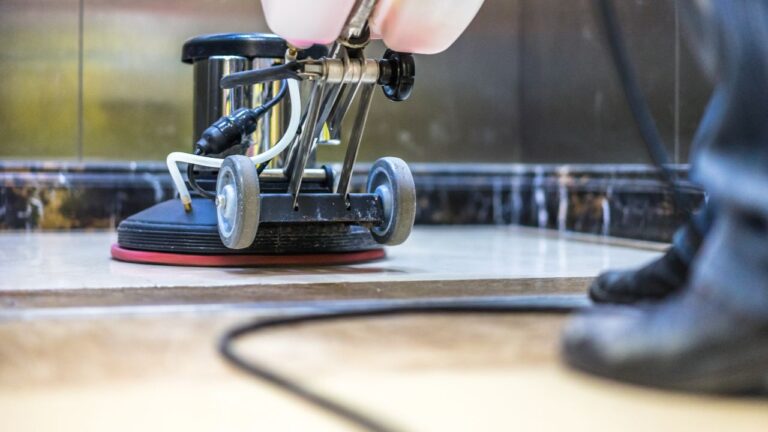
Professional cleaning requires an understanding of different floor types, fixtures, finishes, and materials. Vacuum systems, mops, scrubbers, and tools must be selected and used according to the task at hand. The same applies to cleaning agents, which should match the surface being treated and the level of soil present, ensuring thorough cleaning without leaving residue or causing deterioration.
Technique matters just as much as tools. Correct sequences, dwell times, and application methods directly affect sanitation outcomes and efficiency. When equipment and techniques are used properly and consistently, cleaning becomes safer, more effective, and less disruptive to daily operations — delivering results that are visible, durable, and reliable.
6. Damage Prevention and Asset Protection
Commercial spaces contain valuable assets that require careful handling during cleaning. Floors, furniture, fixtures, glass surfaces, and equipment can be easily damaged when improper methods or rushed practices are used.
We consider asset protection a core responsibility of any professional cleaning operation.
Preventing damage starts with knowledge. Cleaners must understand surface specifications, weight limits, moisture sensitivity, and the correct way to move or clean around furnishings and equipment. Using warning signage, securing loose items, and following safe sequences all reduce the risk of accidents and costly repairs.
Asset protection also reflects respect for the client’s environment. When preventive measures are part of daily routines, businesses avoid interruptions, liability concerns, and unnecessary replacement costs. A cleaning service that prioritizes damage prevention delivers peace of mind along with cleanliness, protecting both the space and the operation it supports.
7. Communication, Reporting, and Issue Resolution
Clear and consistent communication is essential for a commercial cleaning service to operate smoothly within a business environment. We see communication gaps as one of the main reasons clients feel disconnected from their cleaning provider, even when the work itself appears adequate.
A professional operation establishes defined communication channels from the start. This includes clear points of contact, documented instructions, and regular updates on service execution. When expectations, schedules, and special requests are properly communicated, the risk of errors and misunderstandings drops significantly.
Reporting and issue resolution are just as important. When something is missed, damaged, or requires adjustment, it should be identified, documented, and corrected quickly. Structured reporting allows clients to monitor performance and address concerns without friction. When communication is proactive and resolution is timely, cleaning becomes a managed process rather than a recurring problem.
Just as important, we see having an account manager as a major advantage in day-to-day operations.

A personalized point of contact makes it easier to fine-tune routines over time—adjusting task frequency, modifying checklists, adding focus areas, coordinating schedule changes, and escalating issues quickly when something needs immediate attention. Instead of opening a new request chain every time something changes, we can align directly with the same person who understands the facility, the priorities, and the standards expected.
When flexibility is backed by structure—and supported by a consistent account-level contact—cleaning becomes a responsive, well-managed service that adapts to real business needs without losing control of quality.
8. Pricing Transparency and Contract Clarity
Pricing is often where misunderstandings begin in commercial cleaning agreements. We believe pricing should be straightforward, clearly documented, and directly tied to the scope of services being delivered. When costs are vague or poorly explained, businesses risk unexpected charges and misaligned expectations.
A transparent proposal clearly outlines what is included in the price, how often services are performed, and which tasks fall outside the standard agreement.
Contracts should specify service frequency, billing cycles, adjustment terms, and responsibilities on both sides. This clarity allows decision-makers to evaluate value accurately rather than comparing prices in isolation.
Contract clarity also supports long-term partnerships. When pricing structures and terms are well defined from the start, conversations focus on performance and improvement instead of disputes. A clean, detailed agreement creates operational confidence and ensures the cleaning service remains predictable, fair, and easy to manage.
9. Technology for Formalized Processes and Routine Procedures
Technology plays a critical role in bringing structure and accountability to commercial cleaning operations. We see formalized processes as essential for maintaining consistency, especially in facilities with multiple areas, schedules, or service requirements.
Digital tools allow cleaning routines to be documented, scheduled, and followed with precision. Checklists, task logs, and service confirmations help ensure that every procedure is executed as planned, without relying on memory or informal communication. This structure reduces errors, eliminates missed steps, and creates a clear operational rhythm.
Technology also supports transparency and control. When procedures are tracked and documented, performance can be reviewed, adjustments can be made quickly, and expectations remain aligned on both sides. Formalized routines backed by technology transform cleaning from a reactive task into a controlled, repeatable process that delivers dependable results over time.
10. Flexibility for Time-Sensitive and Special Requests
Even the best-defined cleaning plans must allow room for flexibility. Businesses face unexpected situations such as spills, high-traffic events, inspections, VIP visits, or last-minute schedule changes. We believe a commercial cleaning service must be prepared to respond quickly without compromising quality or disrupting operations.
Flexibility means having the staffing, supervision, and processes in place to handle urgent or non-routine requests. Time-sensitive needs should be addressed with clear communication, fast decision-making, and reliable execution. This responsiveness minimizes downtime and helps maintain hygiene standards during critical moments.
Conclusion
Choosing a commercial cleaning service is not about checking a box. It is about protecting daily operations, people, and physical assets through consistent execution. The ten factors outlined in this article highlight what truly matters in a professional cleaning partnership: clear scope, trained staff, reliable coverage, standardized procedures, disciplined use of tools, asset protection, strong communication, transparent pricing, structured processes, and real operational flexibility.
When these elements are in place, cleaning stops being a recurring concern and becomes a controlled, predictable part of business operations. We see the strongest results when expectations are documented, routines are formalized, and communication flows through a dedicated point of contact who understands the facility and can adapt services as needs evolve.
At Busy Bee Cleaning Service, we apply these principles every day across commercial environments throughout New York City. We operate as a long-term partner focused on consistency, accountability, and ease of management. For organizations looking to simplify operations while maintaining high hygiene standards, we invite you to explore our Commercial Cleaning Services in New York and see how a structured approach to cleaning can support your business with confidence and reliability.
Let’s Plan Your Clean
Free Quote
We’ll call you, assess your space, and give you a clear estimate.
Learn how we get real results.